Types of clamps: What exists, what each one is used for, and their applications
4 minutes of reading
By GroupSumi
September 26, 2023
Cable ties, also known as cable holders, cable clamps, or nylon ties, are fastening devices widely used in a variety of industries and applications. These small pieces play a crucial role in organizing and securing electrical cables, pipes, hoses, and other elements.
Types of Flanges: Which Ones Exist, What Each One Is Used For, and Their Applications.
Cable ties, also known as cable holders, cable clamps, or nylon ties, are fastening devices widely used in a variety of industries and applications. These small pieces play a crucial role in organizing and securing electrical cables, pipes, hoses, and other elements.
In addition, there are numerous types to adapt to any application area in order to carry out fastening tasks in the safest and most effective way.
All Types of Flanges on the Market
Nylon Straps
Nylon ties are known for their durability and strength. They are ideal for applications that require high tensile strength and excellent resistance to chemicals. These ties are widely used in the automotive and aerospace industries.
Polypropylene Straps
Polypropylene ties are lightweight and resistant to corrosion. They are perfect for use in outdoor applications, as they are UV resistant. Additionally, they are cost-effective and versatile, making them a popular choice for gardening and construction projects.
PVC Flanges
PVC flanges are resistant to corrosion and water. They are widely used in marine applications and in the plumbing industry. These flanges are ideal for humid environments or where resistance to aggressive chemicals is required.
Polyamide Straps
Polyamide ties, also known as reinforced nylon ties, are extremely strong and durable. They are designed to withstand high-stress conditions and are ideal for demanding industrial environments.
Polyurethane Clamps
Polyurethane straps are flexible and abrasion-resistant. They are especially useful in applications where a firm hold is required but also a certain degree of flexibility.
Teflon Gaskets
Teflon gaskets or Teflon seals are known for their excellent resistance to chemicals and high temperatures. They are ideal for applications involving corrosive substances or extremely hot environments.
Polyethylene Straps
Polyethylene ties are flexible and easy to use. They are ideal for temporary applications and for organizing cables at home or in the office. Although they are less durable than nylon ties, they are an economical option for light tasks.
Self-Locking Clamps
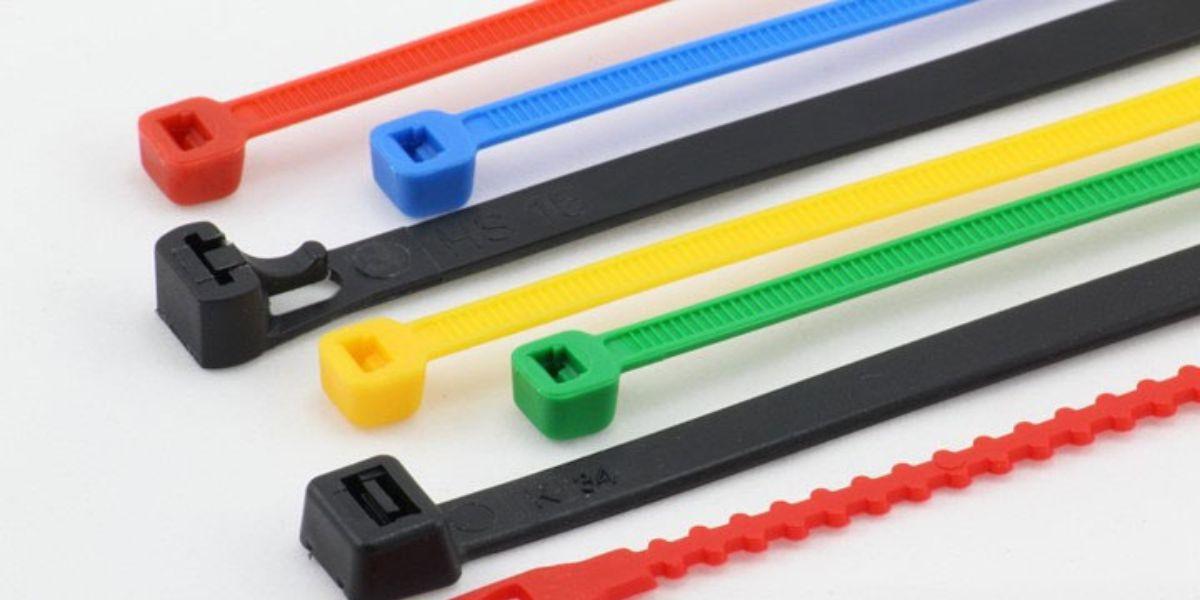
Self-locking ties are designed for a more secure fit. They have a tab on the head that locks into place, preventing the tie from accidentally loosening over time.
Brackets with Integrated Label
These ties have an integrated label that allows for quick and easy identification of the secured elements. They are common in cable management and wiring applications.
Colored Clamps
Colored ties are useful for color coding and visual organization. Each color can represent a specific function or phase in an electrical or plumbing system.
Reusable Closure Straps
Unlike traditional single-use ties, reusable closure ties can be opened and closed multiple times. They are ideal for situations where frequent access to the secured items is needed.
Brackets with Non-Slip Coating
These ties have an integrated label that allows for quick and easy identification of the secured elements. They are common in cable management and wiring applications.
UV Resistant Clamps
UV-resistant ties are designed to withstand degradation caused by prolonged exposure to sunlight. They are ideal for outdoor applications.
High-Temperature Flanges
These clamps are made from materials that can withstand extremely high temperatures, making them suitable for applications in high-temperature environments.
Twist Clamps
Twist ties have a special design that allows for easy tension adjustment. They are useful when an adjustable fastening is needed in dynamic applications.
Advantages of Using Flanges
- Versatility: Cable ties are versatile and can be used in a wide variety of applications, from cable routing to securing pipes and organizing objects.
- Speed of Installation: The installation of cable ties is quick and easy, allowing for time savings in securing and fastening projects.
- Safety: Cable ties provide a secure hold, preventing the secured items from loosening or shifting, which contributes to workplace safety and prevents accidents.
- Effective Organization: They are ideal for organizing cables and wires in domestic, commercial, and industrial environments, helping to keep work areas tidy and clutter-free.
- Identification: Some cable ties are designed with integrated labels or come in colors, making it easy to quickly identify secured items or specific categories of cables.
- Space Saving: Cable ties allow for compact grouping of cables and objects, saving space and facilitating access to systems and devices.
- Durability: Often, cable ties are designed to be durable and resistant to factors such as corrosion, moisture, and chemicals, ensuring their long-term performance.
- Wide Availability: Cable ties are widely available in different sizes, shapes, and materials, making them accessible for a variety of needs.
- Economy: Compared to other customized or permanent fastening solutions, cable ties are an economical option for DIY projects and professional applications.
- Reduced Maintenance: Once installed, cable ties generally require little to no maintenance, simplifying the management of systems and equipment.
Returns within 30 days
Shop with peace of mind. If something goes wrong, we'll take care of it.
After-sales service
Any questions? Our support team will be happy to help you.
Pay how and when you want
Card, bank transfer, PayPal... Installment? We have them all.
GroupSumi is your online distributor for construction, electrical material and climate control.





All rights reserved © 2026 GroupSumi